Safety and Contamination Control During Crime Scene Cleanup
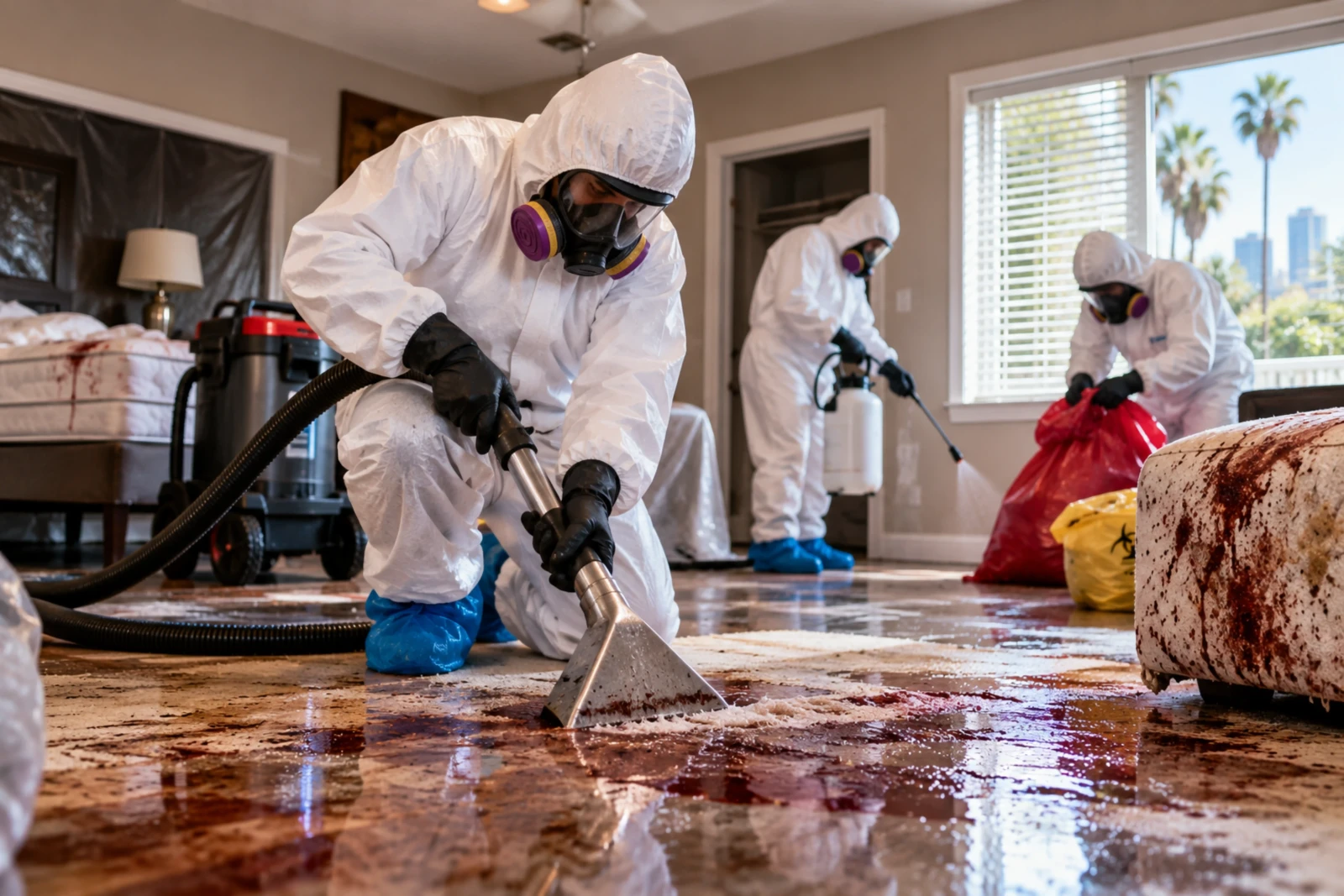
Crime scene environments require strict contamination control to protect both cleanup personnel and the property's future occupants. Before any cleaning begins, we establish a controlled work area — this may include sealing doorways, covering unaffected surfaces, and creating a defined pathway for waste removal.
All team members wear appropriate personal protective equipment matched to the contamination level present. This typically includes fluid-resistant coveralls, respiratory protection, eye protection, and appropriate gloves. PPE is treated as contaminated material and disposed of accordingly after each job.
Cross-contamination prevention is a constant priority. Tools and materials used in contaminated areas do not move into clean zones without proper decontamination. This attention to contamination boundaries is what separates professional biohazard remediation from general cleaning.
Conditions That May Require Specialist Assessment
Some crime scene situations involve conditions that extend beyond standard biohazard cleanup. If we encounter structural damage, potential asbestos-containing materials, extensive water damage, or other conditions outside the scope of biohazard remediation, we communicate that to you and can coordinate with appropriate specialists.
Our role is specifically the safe cleanup and decontamination of biological materials. We do not investigate crimes, handle evidence, or enter scenes that have not been released by authorities. We do not provide legal advice, guarantee insurance outcomes, or make promises about issues outside our direct scope of work.